
Online tutoring marketing works through five channels: a clear website with SEO, search ads, helpful video and social content, referrals from families and schools, and consented follow-up. Start with one subject and a trial lesson, follow children’s privacy and review rules, and track enquiries through to paying students.
Online tutors compete for attention with large platforms and many other tutors. The ones who fill classes usually have a clear niche, an easy way to book and a few channels done well. This guide covers online tutoring marketing in five channels, the privacy and review rules to check, and how to track what works.
Online tutoring marketing: which 5 channels fill classes?
Each online tutoring marketing channel does a different job. You do not need all five at once. Start with the website and one more, then add others when you can handle the enquiries.
| Channel | Best for | What to do |
|---|---|---|
| 1. Your website and SEO | Parents searching for a subject and level | A page per subject and level, clear price or booking path |
| 2. Search ads | Parents ready to book now | Landing page that matches the ad; track booked trials |
| 3. Video and social | Showing how you teach | Free short lessons; no children’s faces without consent |
| 4. Referrals, schools and communities | Trust and repeat students | Ask for introductions; thank people; keep records |
| 5. Email or WhatsApp follow-up | Turning enquiries into students | Only with consent; short, useful messages |

6 steps for online tutoring marketing
Work through these online tutoring marketing steps in order. Each is cheap to try.
Define one subject, level and promise
In online tutoring marketing, a tutor for “everything” is hard to remember. Pick a subject, a level and a kind of learner, such as exam preparation for a given year, and say what you help them do.
Build a clear booking page
Show who you are, your qualifications, the lesson format, the price or a quote path and a button to book a trial. Show times with the learner’s time zone.
Create useful free content
Short lessons, worked examples or exam tips show how you teach. Keep them accurate, and post them where your learners already spend time.
Want help building your tutoring website?
Udaan Digital Solutions can build a clear booking site, set up local and subject SEO and track enquiries. We do not promise student numbers.
Talk to Our Team See Pricing →Ask for introductions
Current students, parents, schools and community groups are often the best source. Ask politely, and thank people. Never offer rewards for a particular review.
Follow up, with consent
Many enquiries do not book on the first message. A short follow-up helps. Only send marketing messages to people who agreed to receive them, and make it easy to stop.
Track every enquiry to payment
Record where each enquiry came from, whether they took a trial and whether they paid. Review monthly and move effort to the channels that bring paying students.
Online tutoring marketing, children’s privacy and reviews
Children’s privacy. The US Federal Trade Commission’s guidance on the Children’s Online Privacy Protection Rule (COPPA) says it applies to services directed to children under 13 that collect personal information, and to general-audience services that know they are collecting it from children under 13. It calls for a clear privacy policy, direct notice to parents and verifiable parental consent before collecting a child’s information, and reasonable data security. Other countries have their own rules, so check the law where your learners live.
Reviews. The FTC’s rule on consumer reviews and testimonials took effect on 21 October 2024. It bars fake reviews and testimonials and buying reviews that require a particular sentiment, and it covers businesses that post testimonials in their own marketing. Use only genuine feedback, with permission, and avoid identifying child learners.
Good online tutoring marketing earns trust with parents, and clear privacy and honest reviews help.
How to run a trial lesson that converts
A trial lesson is the centre of most online tutoring marketing. It lets a learner and parent see how you teach before they commit. Keep it short and structured: spend the first minutes learning what the learner wants, teach one useful idea, check understanding and end with a clear plan.
After the lesson, send a short summary and a simple next step, such as a weekly schedule and the price. Follow up once or twice, then stop. Pressure tactics and false deadlines damage trust. If the learner is a child, communicate with the parent and keep personal details to the minimum you need.
Time zones matter when you teach across countries. Show lesson times in the learner’s local time, confirm the date in writing, and remember that daylight saving changes on different dates in different countries. A missed lesson because of a clock change loses a student.
What does online tutoring marketing cost?
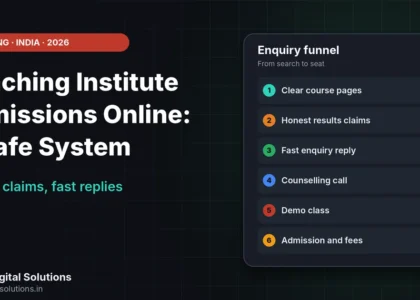
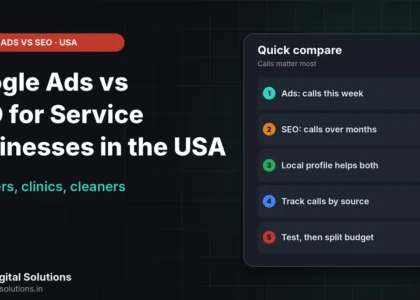
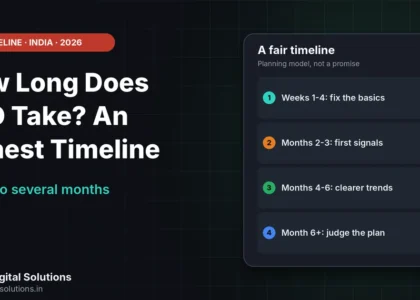
It depends on the channels you use. A website and SEO need an upfront build and monthly work, ads need a budget, and referrals cost time. The Udaan Digital Solutions pricing page, read on 24 October 2026, listed SEO from ₹7,999 a month, which is about $84 at ₹94.95 per dollar, and ads management from ₹8,000 a month with ad spend separate. GST treatment is not stated. See our guide to SEO outsourcing to India for how to set up an overseas team safely. If you teach in India, see coaching institute admissions online. If visitors reach your site but do not book, read why a website gets traffic but zero leads.
Online tutoring marketing checklist
Tick each line before you spend on ads.
- Niche: One subject, level and kind of learner.
- Page: A clear booking page with qualifications and a trial button.
- Time zones: Lesson times shown in the learner’s zone.
- Content: Accurate free lessons or tips.
- Reviews: Genuine only, with permission, none bought or invented.
- Children: Privacy policy and parental consent where children are involved.
- Follow-up: Consent for marketing messages, and an easy way to stop.
- Tracking: Enquiries tracked to trial and payment.
Frequently asked questions: online tutoring marketing
What is the best online tutoring marketing channel?
There is no single best channel. Parents and adult learners find tutors through search, video, recommendations and schools. Start with a clear website and one or two channels, offer a trial lesson, and track which source produces booked and paying students rather than clicks alone.
How do I get my first students for online tutoring?
Ask people you already know for introductions, publish a clear page for each subject and level, offer a short trial lesson and share useful free lessons or tips. Then add search or social ads in a small test. Keep a record of where every enquiry came from.
Do children's privacy rules affect tutoring marketing?
Yes, if you serve children. The FTC's COPPA guidance says services directed to children under 13, or that know they collect data from them, need a clear privacy policy and verifiable parental consent before collecting a child's information. Other countries have their own rules, so check where your learners live.
Can I use student testimonials in my marketing?
Use only genuine ones, with permission. The FTC's reviews rule, effective 21 October 2024, bars fake reviews and testimonials and buying reviews that require a particular sentiment. For child learners, get a parent's consent and avoid posting identifying details. Check local rules.
How much should I spend on ads for online tutoring?
Start small and test. Set a modest budget on one subject and one audience, and measure cost per booked trial lesson and per paying student. We cannot quote a typical figure because costs vary by country, subject and competition. Scale only what works.
Is a trial lesson a good idea?
Usually, because it lets a learner and parent judge fit before they pay. Keep it short, set clear expectations, show the plan after the lesson, and follow up once or twice. Do not pressure anyone. Track how many trial lessons become paid packages.
Related reading and sources
- Coaching Institute Admissions Online: A Safe Enquiry System
- SEO Outsourcing to India for US Small Businesses
- Traffic but Zero Leads? 9 Website Fixes That Work
- FTC: COPPA six-step compliance plan
- FTC: Consumer reviews and testimonials rule Q&A
Final verdict
Online tutoring marketing works best with a clear niche, a booking page with a trial lesson and a few channels done well: website SEO, search ads, helpful video, referrals and consented follow-up. Follow children’s privacy and review rules, and track enquiries through to payment. Udaan Digital Solutions, Greater Noida, can help: +91 7042278448.
Plan your tutoring marketing
Share your subject, learners and budget, and we will outline the first two channels to test.
Contact Udaan Digital Solutions © 2026 Udaan Digital Solutions · Greater Noida, Uttar Pradesh, India · udaandigitalsolutions.in
FTC pages were read on 27 October 2026 and describe US rules, which can change. Udaan Digital Solutions prices were read on 24 October 2026, and dollar figures are approximate at about ₹94.95 per US dollar. GST treatment is not stated. This article is general information and not legal advice. We promise no student numbers.